

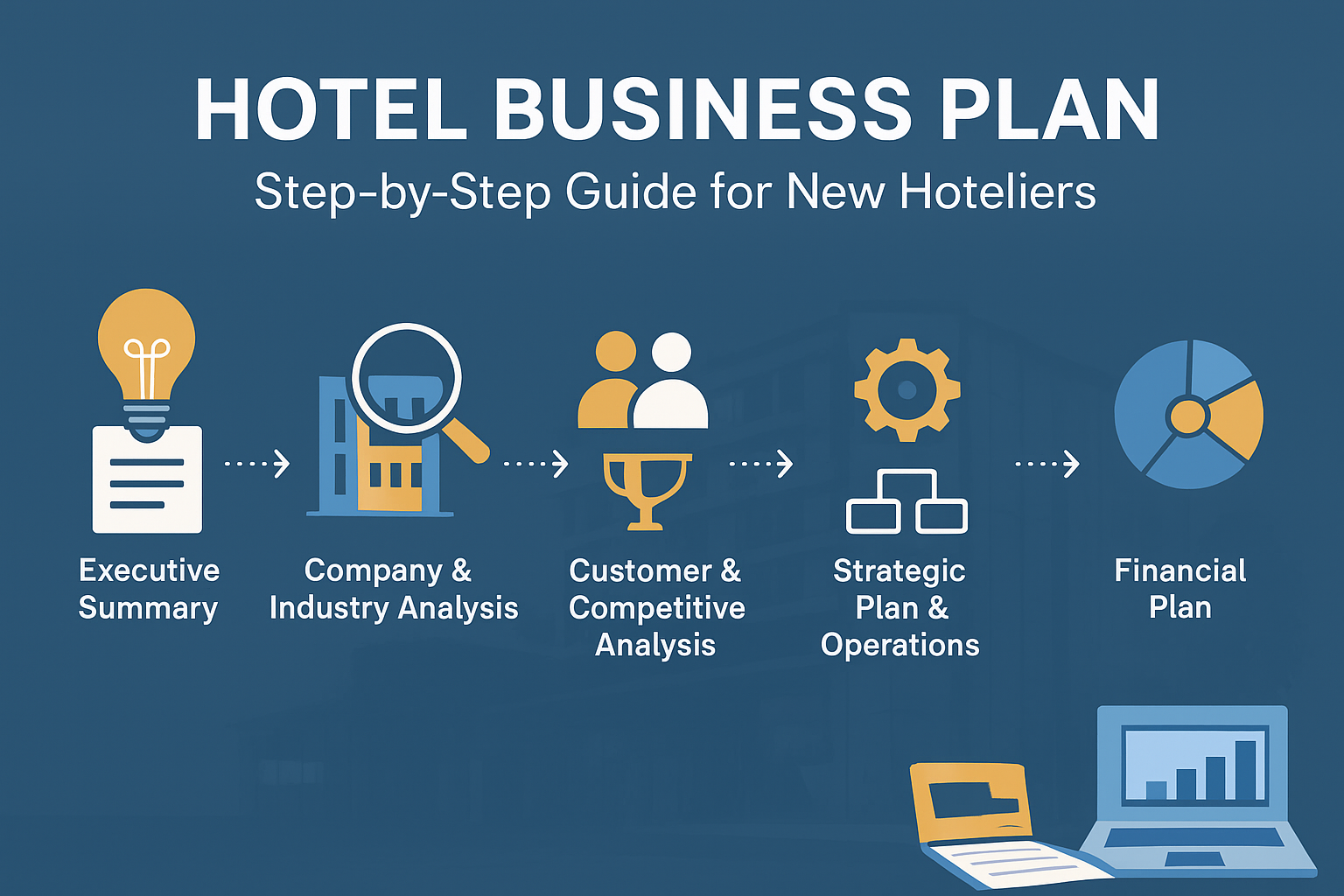
If you’re planning to start a hotel or expand your property, creating a hotel business plan is the first and most important step toward success. Whether you’re pitching to investors, applying for a loan, or mapping out your hotel’s growth, a well-structured plan keeps you focused, organized, and financially prepared.
A hotel business plan acts as your strategic roadmap – guiding you from concept to grand opening, helping you attract investors, and ensuring your hospitality brand thrives in a competitive market.
1. Executive Summary: Define Your Hotel Business Vision
Start with a concise overview of your hotel business plan. Mention your mission, vision, and long-term goals. This section should answer:
- What is your hotel concept?
- What makes it unique?
- What are your key business goals?
Think of this as your elevator pitch — a clear, convincing snapshot of what your hotel stands for.
2. Company Analysis: Structure and Identity
Explain your legal structure — sole proprietor, partnership, or company registration. Share details like your hotel’s name, brand identity, and location. These elements build credibility and define your operational base.
3. Industry Analysis: Understand the Hotel Market in Nepal
To make your hotel business plan strong, study your market deeply. Research:
- Current hospitality trends
- Seasonal changes in guest demand
- Growth opportunities in your area
Use credible industry sources like Hospitality Net or Nepal Tourism Board for insights.
This research helps shape your pricing, marketing, and service strategies.
4. Customer Analysis: Identify Your Ideal Guests
Know your target audience. Are they business travelers, families, international tourists, or backpackers? Ask:
- What do they expect from their stay?
- How can your hotel meet or exceed those expectations?
Defining your guest profile helps you create targeted services, pricing, and promotions.
5. Competitive Analysis: Stand Out From the Crowd
Analyze your competitors — their pricing, reviews, and online presence. Identify their weaknesses and fill those gaps. Highlight your Unique Selling Proposition (USP) — what makes your hotel special and why guests should choose you over others.
6. Strategic Plan: Map Your Hotel Business Strategy
Your hotel business strategy should outline:
- Type of property (boutique, budget, luxury, resort)
- Room categories and pricing
- Branding, website, and OTA presence
- Add-ons like breakfast, tours, or wellness packages
A well-defined strategy attracts your target audience and boosts average booking value.
For tips on pricing, check our guide on How to Define a Winning Pricing Strategy for Hotels
7. Operational Plan: Day-to-Day Hotel Management
Your operational plan explains how your hotel will function daily:
- Staff structure and duties
- Inventory and vendor management
- Front desk and housekeeping systems
- Guest safety and hygiene policies
- Use of technology like Property Management Systems (PMS) and Channel Managers
For automation tools, explore Traveality PMS — a platform that simplifies hotel operations and bookings.
8. Management Team: Meet the People Behind Your Hotel
Introduce the owners, general manager, and key team members. Highlight their hospitality experience and leadership roles. A capable team builds confidence among investors and future guests alike.
9. Financial Plan for Your Hotel Business: Project Profitability
Include these financial components:
- Startup costs
- Monthly operating expenses
- Revenue forecasts
- Break-even analysis
- Funding needs
A detailed hotel business financial plan shows lenders that your venture is realistic and profitable.
Refer to Investopedia’s Hotel Startup Guide for sample financial structures.
10. Key Milestones: Set Clear Targets
Plan your hotel development timeline:
- Property setup and renovation
- Staff recruitment and training
- Website and OTA listings
- Soft launch and grand opening dates
Tracking milestones ensures your project stays on schedule.
11. Appendix: Add Supporting Documents
Attach extra materials such as:
- Hotel layout or design drafts
- Team CVs
- Legal permits and licenses
- Sample menus or service lists
These give investors more context and confidence in your plan.
Final Thoughts: A Hotel Business Plan Is Your Roadmap to Success
Creating a hotel business plan isn’t just about impressing investors — it’s about clarity and control. It helps you align your vision, resources, and operations to build a sustainable hospitality brand.t helps you align your vision, resources, and operations to build a sustainable hospitality brand.
If you’re just getting started, platforms like Traveality and Attic Inn can simplify your operations with tech support, OTA listings, and guest management tools. Whether you’re running a boutique hotel or planning to join a franchise, a solid business plan is your foundation.


